
 By newzclub
The topic of skin color is deeply rooted in genetics, environment, and culture. In this article, we will explore who is considered the blackest person in the world, delve into the science of skin pigmentation, and highlight individuals and ethnic groups known for their deeply dark complexions. From African tribes to fashion icons, this guide sheds light on the significance and celebration of melanin-rich skin.
Defining What “Blackest” Truly Means
When discussing the blackest person in the world, it’s essential to understand that there is no universal scale to measure skin darkness. The term often refers to individuals with extremely high melanin levels, typically a result of ancestry, geography, and genetic adaptation to sun-intense environments.
The Blackest Person In The World: A Viral Mystery
A photograph that once swept across the internet featured an unidentified African man whose skin tone appeared almost blue-black in hue. While his identity remains unknown, many refer to him as the blackest man in the world. His image symbolizes the extraordinary depth and beauty of melanin, drawing global admiration and challenging narrow beauty ideals.
Nyakim Gatwech: The Blackest Woman In The World
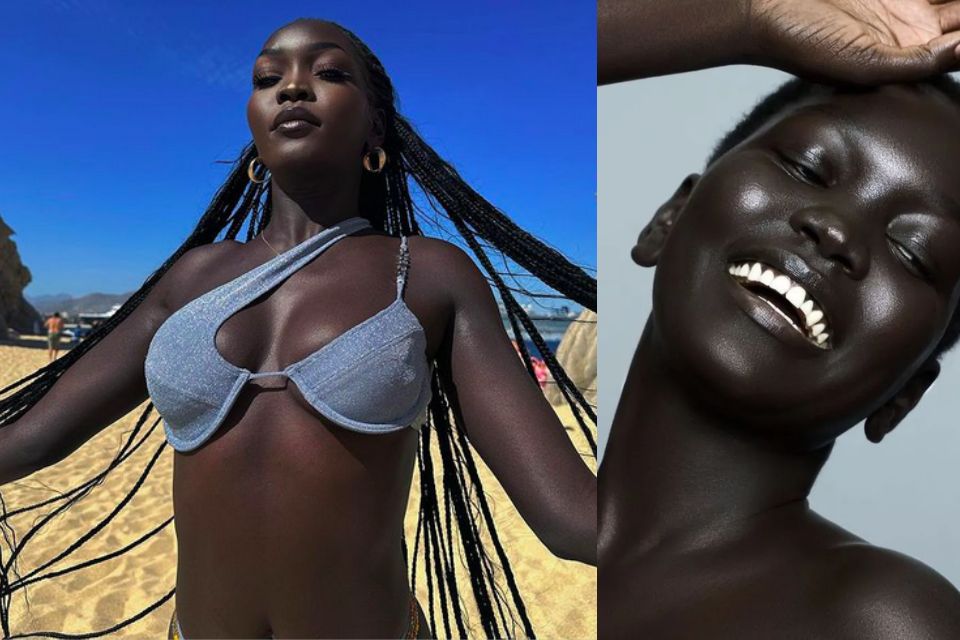
Often referred to as the “Queen of Dark,” Nyakim Gatwech, a South Sudanese-American model, is widely recognized as the blackest woman in the world. Her stunning complexion and bold confidence have made her a powerful figure in the fashion world and a vocal advocate for embracing natural beauty. Through her modeling career and public appearances, Nyakim inspires many to accept and celebrate their skin tone.
“Black is bold, black is beautiful, black is gold,” says Nyakim—her mantra against colorism and Western beauty norms.
Ethnic Groups With The Darkest Skin Tones
Dinka & Nuer Tribes Of South Sudan
The Dinka and Nuer are among the darkest-skinned populations globally. Residing near the equator in sun-drenched South Sudan, their rich melanin levels serve as a natural adaptation to protect against ultraviolet radiation. Their tall, statuesque appearances and deep skin tones have made them stand out both culturally and genetically.
Shilluk People Of South Sudan
Close relatives of the Dinka and Nuer, the Shilluk also boast some of the darkest complexions in the world. Their skin tone reflects centuries of evolution under intense sun exposure and plays a significant role in their identity.
Maasai Of Kenya & Tanzania
Known for their vibrant attire and semi-nomadic lifestyle, the Maasai people possess deeply pigmented skin. Their appearance is both a cultural signature and a result of environmental adaptation in East Africa’s open savannahs.
Melanin In Modeling: Dark-Skinned Icons Reshaping Beauty
Khoudia Diop: The “Melanin Goddess”
Senegalese model Khoudia Diop gained fame for her radiant dark complexion. She uses her platform to encourage young girls around the world to love the skin they’re in, becoming a modern face of melanin pride.
Alek Wek: The Pioneer
South Sudanese model Alek Wek broke barriers in the 1990s, becoming one of the first dark-skinned African models to achieve global fame. Her unique beauty changed the narrative in a predominantly Eurocentric fashion industry.
Anok Yai & Duckie Thot
Models Anok Yai and Duckie Thot have further elevated the global visibility of ultra-dark skin in high fashion. Their striking features and flawless complexion have helped dismantle outdated beauty stereotypes.
Genetics & Environment: Why Some Skin Tones Are Darker
Skin tone is primarily determined by melanin, a pigment produced by skin cells. High levels of eumelanin, found in people from equatorial regions, result in darker skin. Evolutionary biology explains that such pigmentation serves as protection against harmful UV rays, reducing the risk of skin damage and disease.
Cultural Impact & Redefining Global Beauty Norms
In a world that often equates beauty with light skin, deeply pigmented individuals are challenging those assumptions. Social media and fashion have become tools for celebrating melanin-rich beauty. Figures like Nyakim Gatwech and Khoudia Diop remind us that beauty is not one shade, but many.
Final Words
The question of who is the blackest person in the world is not just about skin tone—it’s about identity, pride, and representation. Whether it’s an unknown man whose image captivated the internet or well-known models like Nyakim Gatwech, the celebration of melanin is a reminder of the beauty found in diversity. As society continues to broaden its definition of beauty, the darkest skin tones are rightfully claiming their place in the spotlight.
FAQs
Who is the blackest person in the world today?
The identity of the blackest person in the world remains unofficial, but Nyakim Gatwech is widely recognized for having one of the darkest skin tones.
Is skin color purely genetic?
Yes, skin tone is primarily determined by genetics and influenced by geographic ancestry, especially in sun-rich regions.
Which ethnic group has the darkest skin?
Groups like the Dinka, Nuer, and Shilluk in South Sudan are known for having some of the darkest skin tones on Earth.
What is melanin and how does it affect skin color?
Melanin is a natural pigment that gives skin, hair, and eyes their color. The more melanin present, particularly eumelanin, the darker the skin tone.


